Research you can trust
Everything so far has the model working from material you supplied — your notes, your draft, your data. Research flips that: now you are asking it about the world, and this is where the tool's most dangerous property lives. So let this be said plainly: an AI assistant can be fluent and wrong in the same sentence, and the wrong sentence looks exactly like the right ones. The model produces plausible text — that is the machine's actual job — and most plausible text about the world happens to be true, which is what makes the failures so hard to spot. Why this happens is genuinely fascinating and is a whole lesson in the companion course; what to do about it fits in the four habits below.
The four habits
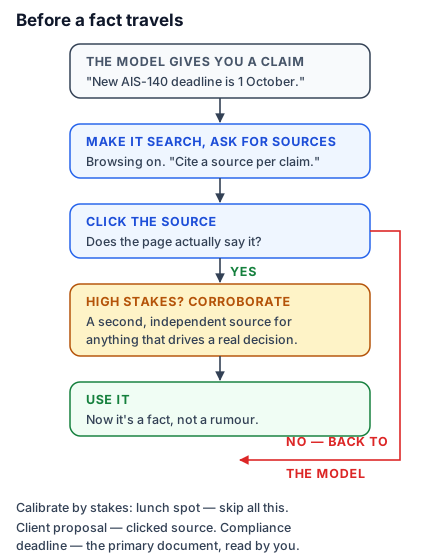
Make it search. Assistants have two modes, and the difference matters more than any other setting. From built-in knowledge, the model answers from training that has a cutoff date and no sources. With web search or browsing turned on, it looks things up and cites what it found. For anything factual — regulations, prices, dates, anything that changes — use the mode that searches, and if you're not sure which mode answered, ask it to search again explicitly.
Get sources, then actually click them. "Give me the source for each claim" changes the model's behaviour for the better all by itself. But a cited answer is not yet a verified answer: the model can cite a real page that doesn't quite say what the summary claims. Clicking the source and skimming for the claim takes thirty seconds. Priya, checking a claim about new AIS-140 requirements for her fleet, clicks through to the transport ministry circular itself — the claim was real, but the deadline in the model's answer was the draft notification's; the final one gave six months longer. Thirty seconds, one avoided fire drill.
Triangulate what matters. For claims that will drive a real decision, two independent sources or it doesn't count — the same rule good journalists use, for the same reason. Ask "find me a second, independent source for this."
Invite the 'I don't know'. Adding "if you're not certain, say so rather than guessing" genuinely helps — models hedge more honestly when invited to. It reduces confident nonsense; it does not eliminate it. Treat it as a seatbelt, not a force field.
Calibrate by stakes, not by vibe
The habits are cheap but not free, so spend them where they pay. A restaurant recommendation needs no triangulation. A fact going into a client proposal needs a clicked source. A compliance deadline needs the primary document, read by you. The failure mode to actually fear is not the big obvious error — it's the small plausible one that sails through because it sounded right: the deadline that's off by a quarter, the threshold that applies to a different vehicle class. Sounding right is the one thing this machine always does.
Used with these habits, AI research is a genuine superpower — twenty minutes to a briefing that used to take an afternoon, with sources lined up for checking. The habits are what make it a briefing instead of a rumour.
Do this today: take one fact you recently got from an AI answer and accepted — everyone has one — and verify it now: source, click, corroborate. Whatever you find, the exercise will permanently change how you read AI answers, which is the point.