One idea, ten assets
Meera's best post last month — Ramniwas-ji carving the block, three days of work, a design that outlives its maker — earned four times her average engagement… and then she posted it once and moved on, which is the most common waste in small-brand marketing. Big teams have repurposing departments; you have a model that transforms text in seconds. This lesson installs the chain that turns one good idea into a week of content across every surface you publish on — and it's the lesson that makes the previous three compound.
The chain runs downhill from the richest version
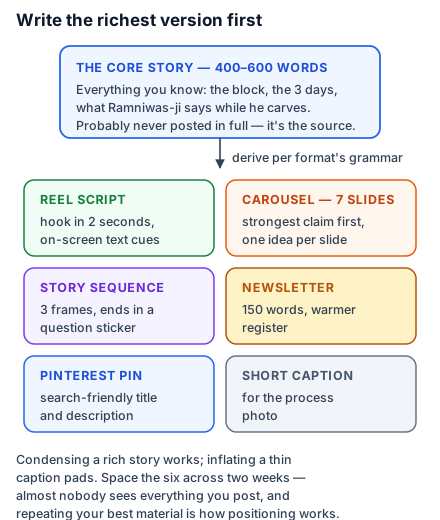
The method has one governing rule: write the richest version first, then derive downward. Condensing a full story into a caption works beautifully; inflating a caption into a story produces padding. So when an idea proves itself, go back and write it up — the full version, 400–600 words, everything you know: the history of the craft, the three days, what Ramniwas-ji says while he works. That artifact — call it the core story — probably never gets posted anywhere in full. It's the source from which everything else compiles:
Here's our core story [paste]. Derive, one at a time, voice doc applies:
1. A 30-second Reel script — hook in first 2 seconds, on-screen text cues
2. A 7-slide carousel — strongest claim first, one idea per slide
3. A 3-frame story sequence ending in a question sticker
4. A newsletter section, 150 words, warmer register
5. A Pinterest pin title + description, search-friendly
6. A caption for the process photo, short version
Each derivation is a re-telling in the target format's grammar, not a summary (lesson 4's dialect point, now at scale) — and because the source is rich, every cut version stays dense instead of padded. Ten minutes of model time, and one workshop morning becomes: Reel Monday, carousel Wednesday, story sequence through the week, newsletter Friday, pin whenever — same story, different doors, and each platform's audience meets it in the shape that platform rewards.
Spacing, and the fear of repetition
The objection everyone raises: "won't followers get bored seeing the same idea?" The data answer: almost nobody sees everything you post — feed reach means even your engaged followers catch a fraction — and format changes the experience enough that the Reel viewer and the newsletter reader are having genuinely different encounters with the idea. The practical answer: space derivations across a week or two, don't ship all six on Tuesday. And the strategic answer is stronger still: repetition of your best material is how positioning works. Nobody built a recognisable brand saying everything once. Your greatest hits deserve re-derivation again next quarter — the calendar (lesson 3) should explicitly recycle proven stories with new angles, and the model makes each re-telling fresh enough that only you notice the machinery.
The chain also quietly fixes the volume anxiety from lesson 1: three genuinely good ideas a month, fully derived, out-publish thirty mediocre one-offs — on every metric including your sanity. The scarce resource was never content; it was stories worth telling, and you need fewer of them than the daily-posting treadmill made you believe.
Do this today: find your best-performing post of the last three months, write its core story properly (twenty minutes, with the model drafting from your bullet points), then run the six-derivation chain. Schedule the derivations across the next two weeks and watch a two-month-old idea outperform this month's new ones.