The one-person marketing system
Twelve lessons of pieces are on the table: voice, calendar, content chain, images policy, repurposing, ads, connections, automations, analytics, authenticity. Any one of them helps; the compounding comes when they run as a system — on a schedule that survives a busy week, with each piece feeding the next. This lesson is that assembly: Meera's operating rhythm, sized for one person, ready to be adapted to yours.
The rhythm
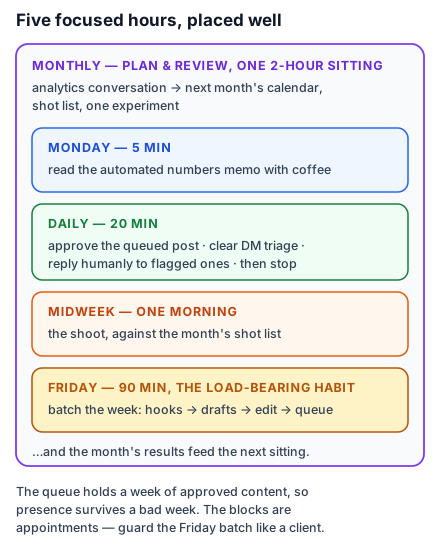
Monthly — plan and review (one sitting, ~2 hours). The analytics conversation on last month's numbers (lesson 11), findings flowing straight into next month's calendar (lesson 3): pillar weights adjusted, proven stories scheduled for re-derivation (lesson 6), one experiment slotted — a new angle, format, or automation to test. If ads ran, the grid gets read and the next grid built (lesson 8). Output: a calendar, a shot list, a hypothesis.
Weekly — the Friday batch (~90 minutes). The week's content drafted in one sitting against the calendar: hooks in bulk, captions and scripts built on the winners (lesson 4), everything through the last-mile edit, into the scheduler or pipeline's review column (lesson 9). Batching is the load-bearing habit — it concentrates the model's leverage, keeps the daily feed presence decoupled from daily creative mood, and turns "posting" from a recurring decision into a solved one.
Weekly — the shoot (~1 morning, calendar-driven). The shot list from planning gets captured in one workshop session: raw material for weeks. Real product, real people, per the standing image policy.
Daily — the 20-minute loop. Morning: approve the day's queued post, clear the DM triage suggestions (lesson 10), reply humanly to the flagged individuals. Evening: engage genuinely for ten minutes — comments, community, the unautomatable part. Then stop. The system's promise is precisely that daily marketing fits in twenty minutes without the feed going quiet.
Monday — read the memo (5 minutes). The automated weekly-numbers draft (lesson 10), skimmed with coffee. No action required — awareness accumulates until the monthly review acts on it.
Why this holds when things break
Sized honestly: five to seven focused hours a week, most of it in two protected blocks — against the fifteen-plus scattered hours the unsystematised version consumes, with worse output. But the real test of a one-person system is the bad week — the exhibition, the illness, the supplier crisis — and this is where the design choices pay: the queue holds a week of approved content, so presence survives absence; automations keep triage moving; the monthly calendar means a lost Friday costs one batch, not the plot. Degrade gracefully: skip the experiment, keep the queue. And one boundary keeps the whole thing honest — the blocks are appointments. The Friday batch cancelled three weeks running isn't a scheduling problem, it's the system quietly dying; guard it like a client meeting, because the client is every future week's sanity.
Start smaller than the diagram: the Friday batch alone, for two weeks. Add the daily loop, then the monthly review, then automations one at a time (lesson 10's advice, now as rollout order). A system assembled gradually gets kept; one launched wholesale gets abandoned by the 20th.
Do this today: put two recurring appointments in your actual calendar — the Friday batch and next month's planning sitting. Recurring, named, defended. The system starts existing the moment those blocks do.